Shillong Cherry Blossom Festival: The Complete Guide
Written by Aditya Bothra, Director, Himalayan Yatra Private Limited | Published: 7 September 2026 | Last reviewed: 7 September 2026
|
Quick answer: The Shillong Cherry Blossom Festival 2026 runs on Friday 20 and Saturday 21 November at the New Shillong Highland Grounds, a new permanent venue outside the city centre. Single-day passes start at ₹2,500 including taxes, sold through RockskiTickets.com. Wild Himalayan cherry trees bloom across Shillong from late October through November, but the exact peak is set by weather and cannot be guaranteed on fixed dates. The blossom itself is free to see and needs no ticket.
|
Most guides to this festival tell you that Shillong turns pink in November and leave it there. This one goes further, because the questions people actually arrive with are more specific: when does it really bloom, has the venue moved, what do tickets cost, can I see the blossom without paying, how do I get there cheaply, and is Shillong even the best place in the Northeast to do this.
Some of the answers below will point you away from booking anything at all. That is deliberate. This page is meant to be useful first.
Contents:
- The 2026 edition at a glance
- What the festival actually is
- How Shillong got its cherry trees
- Every edition since 2016
- The venue has moved: what returning visitors need to know
- The botany: why the Northeast blooms in autumn
- When the blossom actually peaks
- Where to see blossom in Shillong
- Seeing the blossom without a festival ticket
- Cherry blossom across Northeast India
- Getting to Shillong: every option
- Where to stay, across price bands
- Doing the festival independently
- Weather and what to pack
- Permits and entry rules
- Solo travellers, women travellers and accessibility
- Travelling responsibly in Meghalaya
- Combining the festival with a longer trip
- Common mistakes
- Photography notes
- Frequently asked questions
- Sources and verification
The 2026 edition at a glance:
|
Detail
|
2026
|
|
Dates
|
Friday 20 and Saturday 21 November 2026
|
|
Venue
|
New Shillong Highland Grounds — a new permanent festival ground, moved from Polo Grounds in the city centre
|
|
Tickets from
|
₹2,500 for a single-day pass, inclusive of taxes
|
|
Where to buy
|
RockskiTickets.com. Sales opened 4 September 2026 at 6:00 pm
|
|
Line-up announced
|
Khalid, Swae Lee and Boys Like Girls. Two further international headliners are expected, taking the total to five
|
|
Organisers
|
Government of Meghalaya, with RockskiTickets as ticketing partner
|
|
Official website
|
shillongcherryblossom.com
|
|
Information verified
|
7 September 2026
|
Ticket categories, entry rules, artist schedules and venue instructions can change at any time. Check the official site again shortly before travelling, and buy only through the ticketing link published there. Passes resold through social media accounts and unofficial pages carry a real risk of refusal at the gate.
*Planning another Northeast festival trip? Read our Complete Hornbill Festival guide.2026
What the festival actually is
The Shillong Cherry Blossom Festival is an annual event timed around Meghalaya’s autumn bloom. It began in 2016 as a tourism and cultural initiative of the Government of Meghalaya with the Institute of Bioresources and Sustainable Development, and has grown into one of the largest music events in Northeast India. Reported attendance runs into the tens of thousands per edition, with figures of fifty to sixty thousand and above commonly cited, and at least one year’s coverage claiming more than a lakh of visitors across the wider celebration.

It is worth separating two things that get spoken about as one:
- The bloom is a natural event. Wild Himalayan cherry trees flower across Shillong, the surrounding hills and much of the Northeast. It is spread across the city and the region, it is free, and it needs no ticket.
- The festival is an organised, ticketed event held at a single venue over two days, with scheduled artists, stages, food, craft stalls and cultural programming.
The distinction matters more than it sounds. A festival ticket does not guarantee you peak blossom, and seeing flowering trees across Shillong does not get you into the concerts. Plenty of visitors come for one and not the other, and both are valid trips.
How Shillong got its cherry trees
The festival is less than a decade old. The trees are considerably older, and the story of how they got there is the part almost nobody tells.
The wild Himalayan cherry grows naturally across the Himalayan belt, so Shillong was never without it entirely. But the concentration of trees through the city is generally credited to deliberate planting. Nari K. Rustomji, who served as Chief Secretary, is said to have brought cherry seeds back from Japan and scattered them in the wooded ground around his Shillong residence. In 1975, the then Conservator of Forests in Meghalaya, B.N. Das, proposed planting cherry trees on a large scale in and around the hill station.
For four decades after that, the trees flowered every autumn and nobody made much of it locally. What changed was a visitor noticing.
In 2014, Dr Dinabandhu Sahoo, then Director of the Institute of Bioresources and Sustainable Development, was in Shillong to give a TED talk. From his hotel window he saw a pink flowering tree, went to look at it, and confirmed it as a cherry. Travelling further through Meghalaya, Manipur and the wider Northeast, he found the same tree in many places. He went on to study its phenology and is widely credited as the person behind the cherry blossom festivals now held across the region.
The first edition opened at Polo Grounds in Shillong on 14 November 2016, inaugurated by the then Chief Minister, Dr Mukul Sangma, with the state’s Forest and Environment Ministry driving it and IBSD providing the scientific backing. It has been described as the first autumn cherry blossom festival in the world, which, given that Japan and the United States celebrate a spring bloom, is a defensible claim.
The Japanese connection came much later and is now formal. After the Japanese Ambassador visited Meghalaya in 2023, Chief Minister Conrad Sangma announced an official partnership with Japan, and a dedicated Japan Zone was introduced at the festival to showcase Japanese culture alongside the Khasi programming.
CONFIRM BEFORE PUBLISHING: The Rustomji and B.N. Das details appear on smaller sites and have not been corroborated against a primary source. Check with the Meghalaya Forest Department, IBSD or the state archives before publishing this paragraph. If corroboration is not available, either attribute it explicitly as a locally repeated account or remove it. The Sahoo account is better sourced (Fountain Ink) and can stand with attribution.
*Want to add a wildlife experience to your Northeast trip? Explore our Kaziranga tour guide 2026
Every edition since 2016
A record of the festival year by year. Where a cell is blank, we have not yet verified it against contemporaneous reporting and would rather leave it empty than repeat something recycled from listicles.
|
Year
|
Dates, venue and notable acts
|
|
2016
|
Inaugural edition, opened 14 November at Polo Grounds by Chief Minister Dr Mukul Sangma
|
|
2017
|
[to verify]
|
|
2018
|
[to verify]
|
|
2019
|
[to verify]
|
|
2020
|
[to verify — check whether the edition was held, scaled down or cancelled]
|
|
2021
|
[to verify]
|
|
2022
|
[to verify]
|
|
2023
|
Held 17–19 November. Reported as a record edition for participation
|
|
2024
|
Held 15–16 November under a "Year of Legends" theme. Japan partnership announced
|
|
2025
|
[to verify — dates, venue and line-up]
|
|
2026
|
20–21 November, New Shillong Highland Grounds. Khalid, Swae Lee, Boys Like Girls announced, with two more headliners expected
|
CONFIRM BEFORE PUBLISHING: Fill the remaining years from contemporaneous news reports rather than travel listicles, which copy each other’s errors. Once complete this table becomes the most linkable thing on the page. Add one row each November.
The venue has moved: what returning visitors need to know
If you attended an earlier edition, this is the change that will catch you out. The festival has moved from Polo Grounds in central Shillong to the New Shillong Highland Grounds, a dedicated site allocated by the Meghalaya government for large-scale events and intended as the festival’s permanent home. It is being developed with planned capacity layouts, multiple entry and exit points, dedicated parking and better crowd management than a city-centre ground allowed.
Three practical consequences:
- You can no longer walk to it. Polo Grounds was within reach of most central hotels on foot. The new ground is outside the city core, so each festival day now means a road journey in both directions.
- Where you stay matters more than it used to. A hotel picked for its proximity to Police Bazar is excellent for sightseeing and dinner, but adds two round trips across town on each of the two festival days.
- Leaving after the last set will be slow. A large crowd departing a single site at once, on hill roads, is not a fast process. Budget for it rather than being surprised by it.
CONFIRM BEFORE PUBLISHING: Insert a verified road distance and normal drive time from Police Bazar, plus a realistic festival-day estimate, which will be materially longer. Reports give the locality inconsistently — Mahmawdkuk, Mawkhanu and Mawdiangdiang have all appeared in coverage — so confirm the exact location before publishing any figure. A map graphic here would be the single most useful visual on the page.
The botany: why the Northeast blooms in autumn
The tree is Prunus cerasoides, the wild Himalayan cherry. It is not the Japanese ornamental sakura that most people picture, and the difference is not merely academic — it is the reason the whole festival exists in November rather than March.
Japanese and American cherry festivals are held in spring, generally March and April, because that is when their trees flower. Prunus cerasoides flowers in autumn. That single contrast is what makes Shillong unusual: a cherry blossom season that arrives as the northern hemisphere is heading into winter, in a place with no snowfall and a mild hill climate.
The species is distributed widely across the Himalayan belt, and the northeastern hills suit it particularly well. The northeastern Himalaya differs from the western and central Himalaya — lower hills, no snowfall in states like Meghalaya, Manipur, Mizoram and Nagaland, and a different temperature and biodiversity profile. The result is that the same tree flowers across several states within roughly the same few weeks, which is why the blossom is not a Shillong phenomenon so much as a Northeast one.
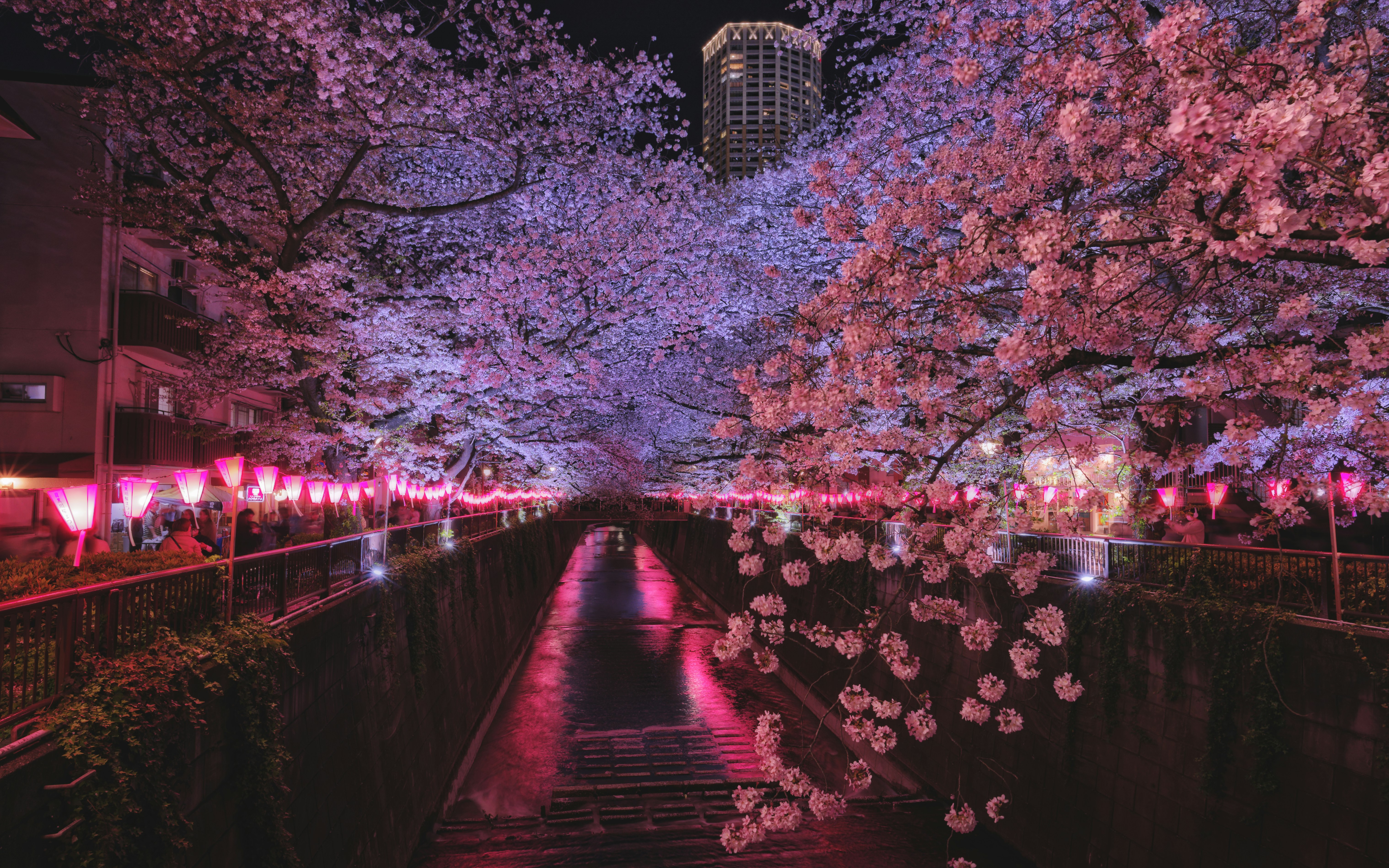
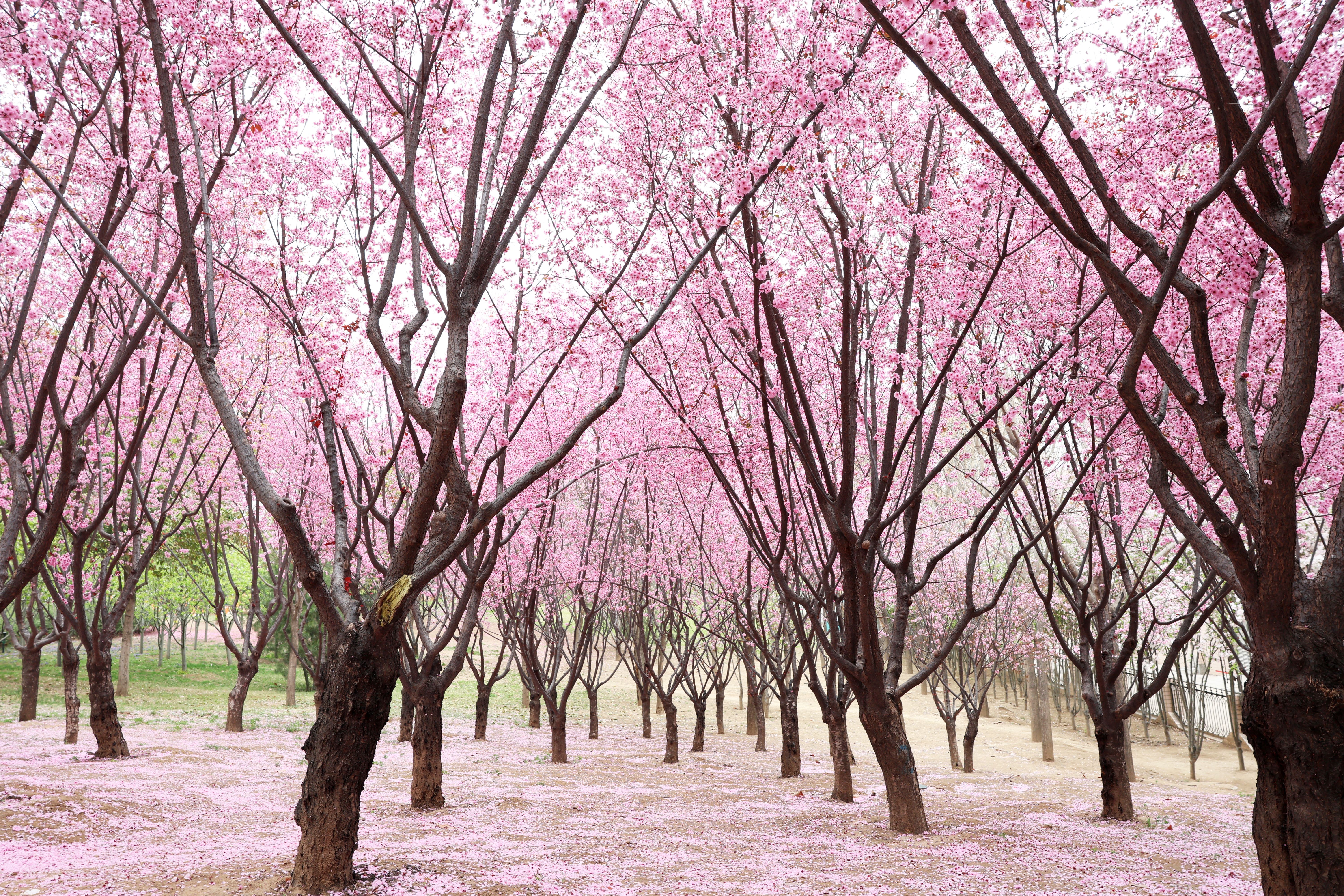
The flowers themselves run from pale pink to a deeper rose, sometimes almost white, and open on bare or sparsely leaved branches, which is what gives the trees their distinctive cloud-like look from a distance.
*Planning to experience another iconic Northeast festival? Explore our Hornbill Festival itinerary for a complete travel plan.
When the blossom actually peaks
Flowering generally runs from late October through November. Across the Northeast blossom belt, the most commonly cited peak window is roughly the tenth to the twenty-fifth of November, which is why the festival tends to be scheduled in that stretch.
But the honest answer is the one most pages avoid: the festival dates are fixed by organisers months in advance, and the bloom is not. Temperature, rainfall, wind and very local conditions all move it. Some trees open early and some late, and a spell of heavy rain or wind can strip a display quickly. Two visitors on the same weekend in different parts of the city can come away with completely different impressions.
Plan the trip so it works regardless. November in Shillong is worth the journey for the clear air, the mild days and cool evenings, the food and the music, and if the trees are at their best while you are there, treat it as the bonus it is.
Where to see blossom in Shillong
Flowering shifts year to year, so treat any list as a starting point rather than a guarantee. The areas people commonly look:
- Ward’s Lake and around. Central, walkable, and among the more reliable spots in the city core. Also where the illuminated evening displays have historically been set up.
- The Polo area. The trees around Polo are still there and still worth a walk. Note that the festival no longer takes place at Polo Grounds — going there will show you blossom, not concerts.
- Upper Shillong and the roads towards Shillong Peak. Higher ground, often good clusters, and better light in the early morning.
- Residential streets and institutional campuses. Some of the best displays in any given year are on ordinary roads and inside campus grounds rather than at named viewpoints.
- The Guwahati–Shillong highway and around Umiam. Worth watching on the drive up rather than treating as a destination.
The practical advice is to ask locally on the morning rather than following a location saved from social media two years ago. Taxi drivers, hotel staff and shopkeepers all know where the trees are looking good that week. Early daylight generally gives better photographs and lighter traffic.
Seeing the blossom without a festival ticket:

This deserves saying plainly, because a lot of coverage implies otherwise: the cherry blossom is free. It grows on public roads, around lakes, on hillsides and through residential Shillong. You do not need a festival pass, and if the concerts are not what draws you, you can have an excellent blossom trip without buying one.
A no-ticket version of the trip works well:
- Walk Ward’s Lake and the surrounding streets in the morning, when the light is better and the crowds thinner.
- Take a shared taxi or local cab up towards Upper Shillong and the Peak road for higher-elevation clusters.
- Spend an afternoon in Police Bazar and Laitumkhrah for food, cafes and bookshops.
- Use the city as a base for day trips to Sohra or Mawlynnong, which have nothing to do with the festival and are the reason many people come to Meghalaya in the first place.
The trade-off is that the festival weekend is when the city is fullest and rooms are dearest. If the concerts are not the point for you, travelling a week either side of the festival will usually give you better rates, thinner crowds and a comparable chance of good bloom.
*Looking for a hassle-free Northeast holiday? Explore our ready-to-book tour packages.
Cherry blossom across Northeast India
Shillong is the largest and best known of these events, but it is not the only one, and depending on what you want it may not be the right one for you.
Mao, Manipur:
Held at Kayinu village near Mao Gate, on the Manipur–Nagaland border in Senapati district, roughly 110 km north of Imphal. The first edition was organised in November 2017 by the Mao Flower Growers’ Association with IBSD, and it has since been folded into the state’s Sangai Festival in late November. It is a smaller, more horticultural affair — flower and vegetable stalls, cherry tree lightings, exhibitions and camping — rather than a large music event.
Longkhum, Nagaland:
Nagaland’s first documented cherry blossom festival began in 2023 at Longkhum, a hilltop village in Mokokchung district roughly 17 to 20 km from Mokokchung town, known for its viewpoints. It is community-driven and small in scale. Mokokchung is reachable by road from Dimapur and Guwahati, though the journey from Dimapur by public vehicle takes the better part of a day.
The wider Naga blossom trail:
Beyond Longkhum, blossom is reported around Kohima, Khuzama near the Manipur border, Pfutsero in Phek district, and in Zunheboto and Wokha. Travellers who want to follow the trail properly generally need six or seven days. Nagaland requires an Inner Line Permit for Indian nationals, unlike Meghalaya.
Sikkim and Arunachal Pradesh:
Both states have autumn flowering in parts, though neither has a festival on the Shillong scale.
|
One correction worth making, because the confusion is common: Tawang in Arunachal Pradesh is frequently listed alongside these as a cherry blossom destination, but Tawang’s blossom is a spring event, generally March to May. If you are planning an autumn trip, Tawang is not part of it.
|
If you want scale, international headliners and a full production, Shillong is the one. If you want quiet, small crowds and blossom without a sound system, Mao or Longkhum will serve you far better, and you should go there instead.
*Want to explore Shillong beyond the festival? Check out our Meghalaya tour packages.
Getting to Shillong: every option:
Shillong has no significant commercial air connectivity of its own, so nearly everyone arrives via Guwahati, about 100 km away in Assam.
By air to Guwahati:
Lokpriya Gopinath Bordoloi International Airport (GAU) is the practical gateway, well connected to Delhi, Kolkata, Mumbai, Bengaluru and other metros. From there it is a road journey of about 100 km along NH6, usually three to four hours, longer with festival traffic or stops.
Shillong Airport (Umroi, SHL):
Shillong does have its own airport at Umroi, roughly 30 km from the city. Connectivity is limited and schedules change, so it is worth checking but rarely the answer. Most visitors will find Guwahati simpler and cheaper.
By Train:
Guwahati railway station is a major railhead with connections across the country, and is a sound option if you are coming from Kolkata or elsewhere in the east. From the station, road transport to Shillong is straightforward.
By helicopter:
The option most guides omit. The Meghalaya Transport Corporation runs a helicopter service between Guwahati and Shillong, a flight of roughly twenty to twenty-five minutes, with services running Monday to Saturday. Fares have been revised over the years and were most recently set at around ₹2,200 per head including GST for the direct sector.
Practical notes, which matter more than the fare. Booking is by telephone through the MTC stations rather than online, and travellers report needing to call a couple of days ahead and pay in cash at the counter. There is a baggage weight limit. The service is weather-dependent and has been suspended and resumed more than once over the years. It is excellent value and a spectacular short flight when it runs, but it is not something to build a tight schedule around.
CONFIRM BEFORE PUBLISHING: Verify the current fare, timings and booking contacts against meghalayatourism.in or MTC directly before publishing, and re-check each year. A stale fare on a page claiming to be a reference is precisely the error that undoes the authority the page is built on.
By shared taxi and bus:
Shared taxis run frequently from the Paltan Bazar area in Guwahati to Shillong and are how a great many people make this journey. They leave when full rather than on a fixed schedule, and cost a small fraction of a private vehicle. Meghalaya Transport Corporation buses also run the route. Both are entirely reasonable choices, and for solo travellers they are the sensible default.
By private vehicle:
A hired car gives you control over departure time, stops at Umiam Lake, and the return from the venue after a late set. It costs considerably more than shared transport, and whether that is worth it depends on your group size and how much the two festival-day journeys matter to you.
Where to stay, across price bands
The venue move has made location a real decision rather than a detail.
- Central Shillong — Police Bazar, Laitumkhrah, Ward’s Lake. Best for sightseeing, cafes, food and evening walks, and closest to the older blossom areas. You will drive out to the festival ground and back on both days.
- The New Shillong side. Cuts festival-day travel substantially, at the cost of a longer run into the city for everything else. Worth considering if the concerts are your main reason for coming.
On price:
- Hostels and backpacker accommodation exist in and around the city and are the cheapest option, with dormitory and private rooms. They fill early for the festival weekend.
- Guesthouses and homestays are widely available, often family-run, and are frequently the best value in the middle of the market. A homestay also puts your money more directly into the local economy.
- Hotels and resorts span a wide range. Rates rise sharply for the festival weekend and the better-located properties go first.
Whatever the budget, book accommodation before anything else. Rooms are the binding constraint on this weekend, not tickets or transport.
*Want to explore another iconic Northeast festival? Discover the Hornbill Festival at Kisama Heritage Village.
Doing the festival independently
You do not need a tour operator for this trip. Plenty of people do it alone, and here is how it works.
- Getting around the city. Shared taxis run fixed routes through Shillong for a few rupees a seat and are the standard local transport. Private hire is available but expensive by comparison.
- Day trips. The Meghalaya Tourism Development Corporation runs guided day tours, bookable a day in advance from its office near Police Bazar. There are usually a few different routes each day. For solo travellers and couples these are dramatically cheaper than hiring a vehicle, and they cover the standard sights competently.
- The festival itself. Buy passes online, arrange your own transport to the venue, and allow generous time in both directions.
- Where independent travel gets harder. Larger groups, tight schedules, families with young children or elderly travellers, and anyone wanting to reach the further Meghalaya destinations across a short trip. That is where a private vehicle starts to earn its cost — not on the city sightseeing, which the government tours handle perfectly well.
Weather and what to pack
November in Shillong means pleasant days and noticeably cool mornings and evenings. Hill weather turns quickly, so layers beat a single heavy garment.
- A light jacket or warm layer for evening concerts, when it gets cold once the sun is down.
- Comfortable closed shoes. Both the festival ground and city sightseeing involve a lot of walking.
- A compact rain layer, even outside the monsoon months.
- A power bank. Long days out with heavy phone use and patchy charging opportunities.
- Any prescribed medicines, since pharmacy hours are limited and the festival weekend is busy.
- A small day bag rather than a large one, given venue bag rules and vehicle space.
Permits and entry rules
Indian nationals do not need an Inner Line Permit for Meghalaya. This trips people up because several neighbouring states — Nagaland and Arunachal Pradesh among them — do require one. If your trip extends beyond Meghalaya, check each state separately.
Carry a government photo ID regardless, for hotel check-in and for entry checks at the venue.
CONFIRM BEFORE PUBLISHING: Verify the current registration requirement for foreign nationals visiting Meghalaya and cite the source, or remove the sentence entirely. Getting a compliance statement wrong on a reference page is worse than omitting it.
Solo travellers, women travellers and accessibility
Shillong is a common stop on independent Northeast itineraries and solo travel here, including for women, is widely done. The usual sensible practices apply rather than anything Shillong-specific: arrive in daylight where you can, keep someone informed of your movements, and be more careful than usual leaving a crowded venue late at night in a city you do not know.
Meghalaya is also a matrilineal society, which visitors often find changes the texture of everyday interactions in ways worth noticing.
On accessibility, the new venue is being developed with planned layouts and multiple entry points, but ground conditions at a large outdoor site in the hills are variable. Travellers with mobility needs should contact the organisers directly to confirm drop-off points, accessible entry, seating and toilet arrangements before booking anything. Do not assume, and do not rely on a travel page for this — including this one.
Travelling responsibly in Meghalaya
- Waste. A large outdoor event in a hill environment generates a great deal of it. Carry your rubbish out, use the bins provided, and avoid single-use plastic where you can. Meghalaya has been notably active on plastic waste and villages here take cleanliness seriously.
- Spend locally. Homestays, local food stalls, Khasi craft sellers and local guides keep tourism money in the community rather than routing it out of the state.
- Photographing people. Ask first, particularly in villages and at cultural performances. A festival crowd is one thing; a person going about their day is another.
- Respect the trees. Do not pull branches down for photographs. It is more common than it should be, and the trees are the entire reason anyone is there.
- Sacred groves and villages. Meghalaya has protected sacred forests with genuine restrictions on what may be taken or done. Follow local instruction without argument.
Combining the festival with a longer trip
Most people who come this far do not come only for two concerts. Meghalaya rewards a longer stay, and the festival sits well at the start or end of one.
- Sohra (Cherrapunji), about 55 km from Shillong, for waterfalls, canyons and the living root bridges of the surrounding villages.
- Mawlynnong and Riwai, for the well-known village and the single-decker root bridge nearby.
- Dawki and Shnongpdeng, for the Umngot river and the Bangladesh border.
- Nongriat, for the double-decker root bridge, which requires a serious stair descent and back up.
- Mawphlang, for the sacred forest and an accessible introduction to Khasi belief.
If you are travelling in the region in late November, note that the Hornbill Festival in Kohima follows in early December, and the Naga blossom belt is flowering at much the same time. A longer Northeast itinerary can reasonably take in both, and the two events are entirely different in character.
What does not work is compressing Sohra, Dawki and Mawlynnong into a two-day festival weekend. Both halves suffer. Give the state its own days.
Common mistakes
- Expecting peak bloom on the festival dates. The dates are fixed months ahead and the trees do not consult the calendar.
- Assuming you can walk to the venue. True at Polo Grounds, no longer true. This is the most common outdated assumption going into 2026.
- Booking an early Sunday departure. After a late Saturday concert and a road transfer to Guwahati, an early flight is a bad plan. Go late afternoon or later.
- Buying passes from social media resellers. Use the official platform. Refusal at the gate is a real outcome.
- Leaving accommodation to last. Rooms sell out well before passes do.
- Over-scheduling the festival days. A packed sightseeing morning is the usual reason people miss the opening sets.
- Assuming Tawang is an autumn blossom trip. It is a spring one.
Photography notes
The blossom photographs best in the early morning, when the light is soft, the crowds are thin and the roads are clear. Midday light on pale pink flowers against a bright sky is unflattering and hard to recover.
For the trees, look for depth rather than isolated branches — a blossom-lined road with hills behind will say more than a close-up that could have been taken anywhere. For the flowers themselves, get close and let the background fall away.
At the concerts, be realistic. Evening stage lighting at distance is difficult for a phone, and the results are usually disappointing. You will generally enjoy the sets more if you take a couple of frames early and then put the phone away.
If you photograph performers, stall holders or local people, ask. Venue rules on professional equipment and drones change year to year and should be checked with the organisers rather than assumed.
*Planning to explore more of the Northeast with a group? Check out our Sikkim group tour packages.
Frequently asked questions:
When is the Shillong Cherry Blossom Festival 2026?
Friday 20 and Saturday 21 November 2026.
Where is the 2026 festival held?
At the New Shillong Highland Grounds, a new permanent venue in New Shillong, outside the city centre.
Has the festival venue changed?
Yes. It has moved from Polo Grounds in central Shillong to the New Shillong Highland Grounds, allocated by the Meghalaya government as a dedicated site for large-scale events.
How much do tickets cost?
Single-day passes for 2026 start at ₹2,500 including taxes. Higher categories and multi-day passes cost more. Prices are set by the organisers and change between editions.
Where do I buy tickets?
Through RockskiTickets.com, the official ticketing platform, or the link published on the official festival website. Sales for 2026 opened on 4 September 2026.
Do I need a ticket to see the cherry blossoms?
No. The blossom grows on public roads, around lakes and across the hills. It is free to see and completely separate from the ticketed event.
Who is performing in 2026?
Khalid, Swae Lee and Boys Like Girls have been announced, with two further international headliners expected. Check the official site for the full schedule.
When did the festival start?
The first edition opened at Polo Grounds on 14 November 2016, as an initiative of the Government of Meghalaya with the Institute of Bioresources and Sustainable Development.
Why does Shillong have cherry trees at all?
The wild Himalayan cherry grows naturally across the Himalayan belt, and the concentration through Shillong is credited to deliberate planting, including a large-scale proposal by the Conservator of Forests in 1975.
Are these the same trees as in Japan?
No. Shillong’s trees are Prunus cerasoides, the wild Himalayan cherry, which flowers in autumn. Japanese ornamental cherries flower in spring.
When do the blossoms peak?
Generally from late October through November, with the most commonly cited peak window across the Northeast falling roughly between the tenth and twenty-fifth of November. It varies with weather and cannot be guaranteed.
Where can I see blossom in Shillong?
Ward’s Lake and the surrounding streets, the Polo area, Upper Shillong and the Peak road, and many ordinary residential roads. Ask locally on the day, since the best spots move year to year.
How do I get to Shillong?
Most people fly or take a train to Guwahati and travel about 100 km by road, usually three to four hours. Shared taxis, buses, private vehicles and a helicopter service all cover the route.
Is there a helicopter to Shillong?
Yes. The Meghalaya Transport Corporation operates a Guwahati–Shillong helicopter service of roughly twenty to twenty-five minutes, running Monday to Saturday, most recently priced at around ₹2,200 per head including GST. Booking is by phone and the service is weather-dependent.
Do I need a permit for Meghalaya?
Indian nationals do not need an Inner Line Permit for Meghalaya. Nagaland and Arunachal Pradesh do require one, so check separately if your trip extends beyond the state.
How far is the venue from central Shillong?
[to confirm — insert verified distance, normal drive time and a separate festival-day estimate]
Can I do the festival without a tour operator?
Comfortably. Shared taxis cover the city, government day tours run from near Police Bazar and are bookable a day ahead, and passes are bought online. A private vehicle mainly helps larger groups, tight schedules and travel beyond the city.
How many days do I need?
Three nights covers both festival days and central Shillong. Add three or four more for Sohra, Dawki, Mawlynnong and the root bridges, which deserve their own days rather than being squeezed into the festival weekend.
Are there other cherry blossom festivals in Northeast India?
Yes. Mao in Manipur has held one since 2017, now within the Sangai Festival, and Longkhum in Nagaland since 2023. Both are smaller and quieter than Shillong. Blossom is also reported around Kohima, Pfutsero, Khuzama, Zunheboto and Wokha.
Is Tawang a cherry blossom destination?
Not in autumn. Tawang’s blossom season is in spring, generally March to May, so it does not belong in a November itinerary.
Is it worth going if the blossom is poor that year?
For most people, yes. November in Shillong is mild and clear, the food and music are the real draw for many visitors, and Meghalaya beyond the city is not seasonal in the same way.
Sources and verification
Festival dates, venue, ticket prices and line-up verified 7 September 2026 against the following. Anything not yet corroborated is marked in the text.
- Official festival website: shillongcherryblossom.com
- Official ticketing platform: rockskitickets.com
- The Shillong Times, 31 August 2026, on the permanent venue and first headline announcements
- Rolling Stone India, on the 2026 line-up and ticket pricing
- Time Out India, on the venue move and the ticket on-sale date
- Fountain Ink, on Dr Dinabandhu Sahoo and the origins of cherry blossom festivals across the Northeast
- Meghalaya Tourism and Meghalaya Transport Corporation, on helicopter services and connectivity
- PTI reporting via Morung Express, on the first Manipur cherry blossom festival at Mao
If you find something on this page that is out of date or wrong, we would rather know. The page is reviewed and updated each year, and after each edition of the festival.
Disclosure:
Himalayan Yatra Private Limited operates guided tours in Meghalaya and across Northeast India, including a private departure over the 2026 festival weekend. We have tried to write this guide as we would want to read it — which is why it covers shared taxis, government day tours, the helicopter service and doing the trip entirely on your own, all of which compete with what we sell.
CONFIRM BEFORE PUBLISHING: Insert a single, plain internal link to the tour page here. One line, no urgency, no persuasion. If the departure is closed, point it at the general Meghalaya tours page instead.
About the author
Aditya Bothra is Director of Himalayan Yatra Private Limited and has spent over two decades operating journeys across Northeast India, Sikkim, Bhutan and Nepal.
CONFIRM BEFORE PUBLISHING: Use this exact byline and bio in the visible byline, the author page and the Article schema. Confirm the experience claim is one you will defend publicly.